You might think your breast are just a lump of fat clings on your chest. Guess what, they are actually really important and made up of other complex things especially for women. Breast or casually called as boobs is an organ of ectodermal origin, typical of mammalians, whose structure reflects its special function: the production of milk for lactation. As for human, breast has undoubted aesthetic value either in women or men.
The breast consist of the mammary gland and a fibrous stroma, which contains adipose tissue. The breast has up to 20 lobes, each possessing a separate efferent duct opening on the nipple. The ratio of the fatty tissue to glandular tissue varies among individuals. It also depends on the stage of growth the woman is having. Menopause who has lesser oestrogen makes the fatty tissues increased as the glandular tissue diminishes. During pregnancy, the glandular tissue transforms into the lactating breast that’ll make your breast basically swells and your nipple’s darker. While on period, breast usually feels sore because the glands are preparing for lactation. Male breast structure is almost identical to female’s. Except, male’s breast tissue lacks the specialized lobules because none physiologic reasons needed for milk production. That’s why they don’t grow bigger.
Normal breast tissue often feels nodular (lumpy) and not that smooth especially around the time of period and varies in consistency. The nipples also may vary in size and shape. The areolae, or pigmented area around the nipple, may be any colour from light pink to black (or slightly darker than your skin), and may vary in size from a very narrow ring to one which covers as much as half of a small breast. You may find a slight difference in the size or shape between your breast, areola, or your nipple – this is absolutely normal.
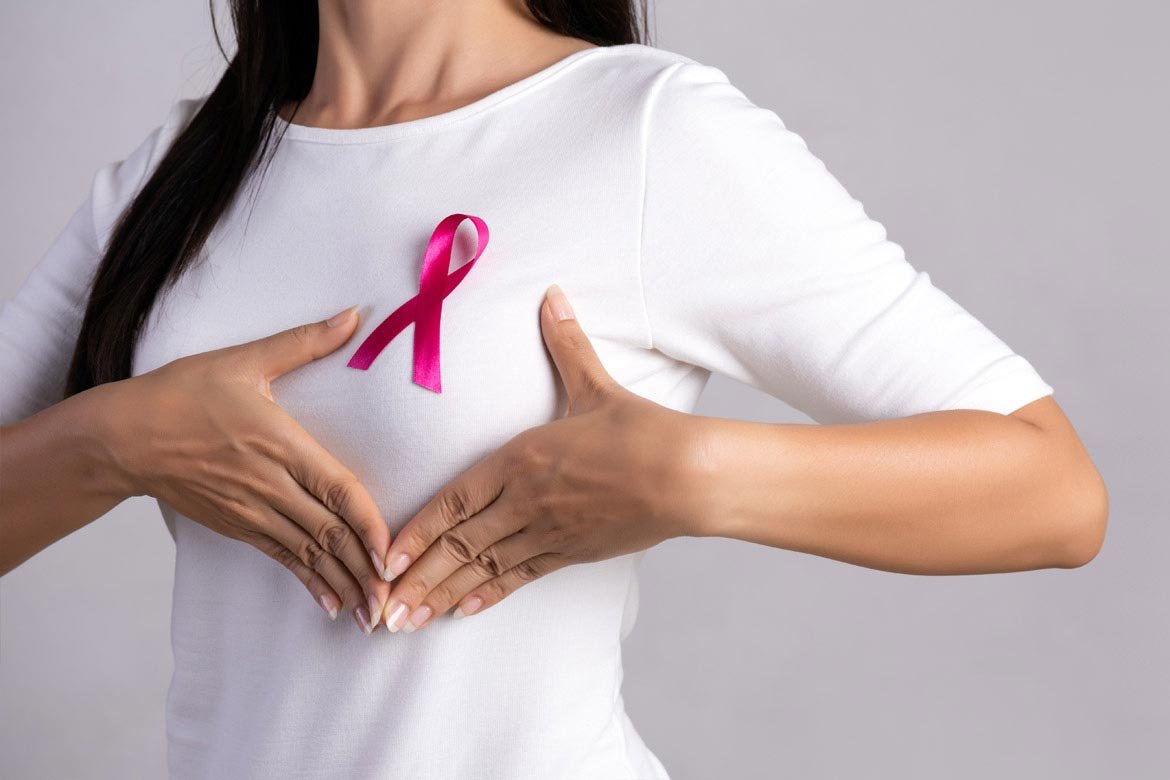
Considering the complexity and it’s variations, knowing your normal breast is really important. Beside the changes above, there are also pathologic changes that may direct you to diseases that can occur on your breast, but the most threatening is breast cancer. Breast cancer, also known as mammary carcinoma, is a malignancy in breast tissue that can originate from glands, gland ducts, fatty tissue or breast connective tissue. This cancer is also included in the WHO records and is included in the International Classification of Diseases (ICD) with code number 17. The Ministry of Health of the Republic of Indonesia, as of April 31, 2019, stated that breast cancer is the highest type of cancer in women at 21.2 per 100,000 population with an average death rate of 17 per 100,000 population. The faster the identification, the better the prognosis. Almost all malignant breast tumours are found by the patient and only a small percentage are found on routine examination.
Pemeriksaan Payudara Sendiri or SADANIS is a screening that can be done alone to check our breast regularly anytime. It is recommended for female after puberty, mainly woman above 30, to do this once a month. The technique is so simple and easy to do. What you need is a mirror and your feelings. Same as the other daily check-up, you need to start on inspecting your breast followed by palpation. Try on several position, such as: arms beside your body, arms raised, arms on your hips, lying down, and looking down while your breast are ‘hanging’. The findings that you might consider to check to your doctor are: extreme asymmetrical and or changes on your breast/areola/nipple shape, colour, position, or/and size, dimpling, puckering, bulging, redness, soreness, rash, swelling, orange skin texture, or fluids coming out from your nipple ( blood/yellow fluid, watery/milky fluid – note that you’re not at lactation period). Hopefully, knowing your breast may let you know and love yourself more.
References:
- Moore KL and Dalley AF. 2013. Anatomi Berorientasi Klinis. Edisi Kelima. Jilid 1. Jakarta : Erlangga
- Bistoni, G., & Farhadi, J. (2015). Anatomy and physiology of the breast. Plastic and Reconstructive Surgery; 477–485. doi:10.1002/9781118655412.ch37
- Komite Penanggulangan Kanker Nasional. 2014. Panduan Penatalaksanaan Kanker Payudara. Jakarta : Kemenkes
- Suryaningsih EK, Sukaca BE. 2009. Kupas Tuntas Kanker Payudara. Yogyakarta : Paradigma Indonesia
by Deandra Athaayaa Iswari